Showing posts with label Rings. Show all posts

Saturday, 4 February 2012

The Rings - part 2

I had promised myself to make another post about the rings, simply to give you more examples to inspire you when hunting for the right rings. As I wrote in an earlier entry I went to the Danish National Museum between christmas and newyears and took a lot of pictures for you from their medieval ring collection.

As you can see the exhibited rings are all gold, but at the time they were also made in other metals like silver. The national museum usually only show the most impressive ones.
I especially adore the engagementrings:
The above are all from 1200-1500 and characterized by hearts, knots, hands reaching for each other or even scultured lovers.
The rings from the early part of the Middle Ages are often twined or plaited and occurs from 1050-1150. Twined arm and neck rings were known by the vikings, but the finger rings arrived with the start of medieval times:
In the late medieaval period signet rings were used to press into hot wax like a person would sign their name today. These were copied by peasants in bronze or silver.
The rings worn by the bishops were often very elaborate with precious stones - Sapphires, rubies, amethysts and garnets - and with holy ingravings like the cross, jesus' face (1350-1450 AD), or the names of saints and Mary.


Lastly there's the rings inscribed with patterns, intitals or words from the bible. They were popular in the 14th and 15th century.
Maybe some of these rings will inspire you when you are looking for some for your wedding :-).

Thursday, 29 December 2011

Danish National museum's medieval Collection

Today I went to the Danish National Museum in Copenhagen to prepare for the winter finals. The semester is at an end, and so is the course on Early Bronze Age and and Neolitikum (late Stone Age.)
While I was there I saw their medieval collection as well as I know they have a bridal crown. It's not a particularly big exibition but I enjoyed it immensly.
I am excited to show you some pictures from it, especially of the engagement rings.
I love the one on the right with the man and the woman holding eachother. The second one from the left features two hands coming together and is a fairly common motive from around 1200-1500.
The bridal crown is magnificent found under the floor in a Jytlandian church. Presumably it is from 1525 and was worn by a wooden Idol of Mary. Sometimes the churches would have a bridal crown that the brides getting married could borrow in case they couldn't afford their own. Maybe this one have been such a crown:
Another object worth mentioning are the luxurious drinking horns. I am not sure for what event they were intended but surely it could be a wedding:
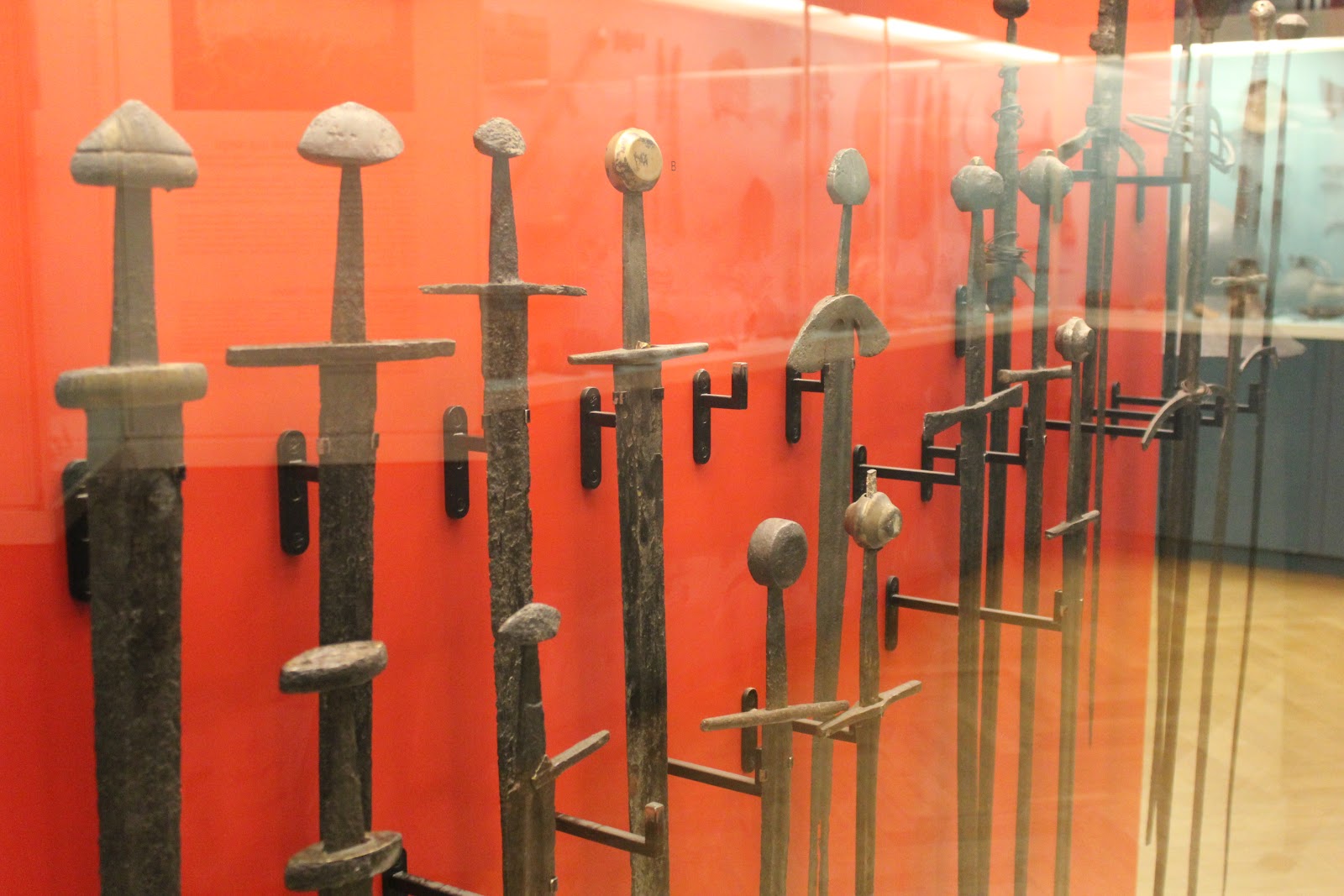
I really love museums. Being surrounded by all these old treasures takes me right back in time. I also like looking at all the weapons and oversized swords. I am hoping that Robert comes to the wedding with a sword in his belt :)
I have a lot of pictures and I'll be making an entry with more of the gleaming rings for you :) Happy new year - The Medieval Bride

Monday, 12 December 2011

Christmas Wedding

In the spirit of Christmas I want to give you a little collection of photos of what a christmas wedding might look like. If you have collected rosehips in the autumn you can dry them and stick them in hollow pieces of birch trunk. Like in the picture below, a raw wooden table might be enough to give a medieval feel, if you prefere modern plates and utensils. Red fabric napkins will look well with the rosehips. Any medieval wedding will be complete with candles and in the darkness of winter the warm glow will be soothing. Naked branches from the garden may also decorate the venue.

You can spread things like apples, cinnamon, nuts, pine cones, spruce along the tables. I also found this wedding dress for groom and bride from Historic-costumes.eu in true christamas colors:

A couple of golden rings with a red stone would be appropriate and perhaps a floral wreath with red flowers:

The Honey Comb
Have a very merry chrismas you all :-) 

Sunday, 10 April 2011

The rings

The rings are very important to any bride and groom, and if you like the looks of the medieval rings found by archaeologists and amateurs then it's another opportunity to add another very authentic touch to the wedding.
You can never go wrong with the simplest choice of a plain ring of gold or silver. It's a classic no matter the time period and you can always make an inscription on the inside to make it special. This was common in the renaissance like this one:


17th Century, gold poetry ring
Reads: A loving wife prolongeth life
Link
Early in the middle ages gold rings were ONLY for the top of the elite.

A very common ring in the Medieval was the stirrup ring - named so because it looked like the stirrups used when riding. They're simple and elegant and with a single or no stone. Found from 1200 and throughout the rest of the Middle Ages.


There's also rings with floral print (12-1400) like this:
Link
The last type of rings I shall mention are the Gothic Tard Mold rings (12 and 1300)- a precious stone is placed on a plate on the ring as such:


Link
 I had to show you these last two, which are rare, but I think they are very romantic and beautiful:
17th Century

11th Century - presumably
I hope you find fantastic rings yourself, but remember: You will be wearing them all your life, so choose with your heart and not on the basis of your theme!